One of the most frequent questions I get asked by slot machine players is, “Should I play max credits?”
Slot machines don’t become due for a win when they haven’t paid out in a long while, and they also don’t become hot and start paying out more. Every spin is like a single coin toss or a single roll of the dice—the outcome is independent of all the outcomes prior to it. The location of the slot machine. Slot machines don’t become due for a win when they haven’t paid out in a long while, and they also don’t become hot and start paying out more. Every spin is like a single coin toss or a single roll of the dice—the outcome is independent of all the outcomes prior to it. The location of the slot machine in the casino matters.
Years ago, anybody that had any knowledge about slot machines knew that you always play the maximum number of credits or coins. It was similar to video poker where you should never play without betting max coins because if you do, you won’t qualify for the bonus when you hit the royal flush. If you can’t afford to play max coins then you need to drop down in the denomination you are playing. In other words, if you can’t afford to play 5 credits on the dollar machine ($5 per spin) drop down to the 50 cent machine so you can play 5 credits ($2.50 per spin). This advice held true for slots as well because almost all slots offered a jackpot bonus.
Let’s first take a look at why that advice was so important. If you didn’t play the maximum coins on those machines you did not qualify for the bonus the machine gave you for the jackpot. By not playing max coins you were not receiving the maximum payback percentage from that machine. As I’ve talked about in the past, every slot machine is set to payback a certain percentage of the money it takes in. This percentage is set over a long period of time so it doesn’t mean that if you put in $100 on a machine that has an 88% payback, you would win $88. That wouldn’t make a whole lot of sense and wouldn’t be much fun. It is set for the long-term, but the casino is guaranteed to make money over the long haul on that machine.
By not betting max coins, you are lowering the payback percentage even more. Some slots have a low set payback percentage so you certainly don’t want to do anything to make it even worse. The best example is the large progressive Megabucks slot machine that I’ve posted about before. You should be shot if you are playing that machine without playing max credits. That slot machine already has a low payback, usually between 85-88%, and by not qualifying for the jackpot that payback is lowered even more. Not only that, but if you ever did hit the jackpot not playing max credits, you would probably want to jump off a bridge. NEVER play these games without max credits bet.
A common mistake that many people succumb to is when they are down to their last credits. Say they are playing a $1 Megabucks machine that requires three credits to qualify for the jackpot. They might put in $100 and when they get down to only $2 left, instead of going through the hassle of cashing out $2 or having to put in another $1 they go ahead and spin the reels with only 2 credits bet. DON”T DO IT. I’m saving you a life of psychiatric counseling if you ever hit the jackpot in this situation.
With the introduction of video slots things have changed dramatically. This advice is no longer viable for many machines. In fact, you want to do the opposite for any machine that doesn’t have a bonus jackpot. As a player you are better off playing one credit on a dollar denomination machine than 4 credits on a 25 cent machine. The reason is the higher denomination machines are usually set at a higher payback percentage. In essence, the proper play on slot machines has reversed. However, there are some video slots that do offer large progressive jackpots or bonus jackpots so for those machines the old rule holds true. Always play maximum coins on those machines or play another machine.
The bottom line is as a gambler you need to understand what you are playing. I know it’s fun to put money in a machine you’ve never played before and just hope for beginners luck, but if you do that on the wrong machine and realize you could have won the million dollar jackpot, you will never forgive yourself.
When this does happen people try to comfort themselves with the notion that the machine only let them hit the jackpot because they weren’t betting max credits. They tell themselves it would not have hit if they were betting maximum credits. That’s completely false. The RNG has no idea how many credits you play, and the RNG sequence for the jackpot is the same no matter how many credits you play. Sorry to be the bearer of bad news to anyone this has happened to, but as long as the machine uses a RNG it’s true.
Slots are among the most popular ways to gamble. It’s easy to sit down, put your money in, and watch the reels spin. But there’s more going on than you might expect. Let’s take a look inside to understand what’s happening when you pull the lever.
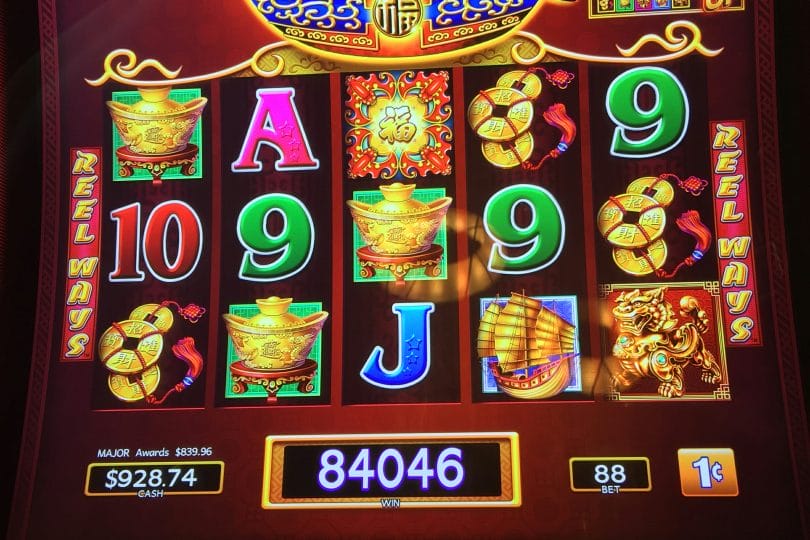
Slot machines generally have three or more “reels,” each of which has a number of symbols. While physical slot machines may have 20 or more symbols per reel, digital technology allows them to have many more—some have 256 virtual symbols—with millions of possible combinations. The combinations of symbols that pay out if you bet on them are called “paylines.”
Slot machines contain random number generators that can generate thousands of numbers per second, each of which is associated with a different combination of symbols. Whether you win or lose is determined by the random number generated in the exact instant you activate each play—if it matches a payline, you win. Since each spin is independent, random and unrelated to previous or future spins, it’s impossible to predict what will happen on each play.
There are many different kinds of slot machines. Some allow you to choose how many paylines to bet on per play, and how much you want to bet. Before you put your money in, figure out the cost per play, the odds, the paylines, the return to player, and anything else that will help you make the right decisions for you. Look for pay tables on or near the machine that explain everything you need to know.
The possible payouts and the odds of winning depend on the machine you’re playing, the paylines you choose to play, and how many credits you wager.
Machines that cost pennies to play might pay out small prizes relatively often. Others cost several dollars per play, but offer bigger jackpots and higher odds. For instance, for the I Heart Triple Diamond penny machine, the odds of winning a prize are 1 in 12, but the odds of winning the top prize are only 1 in 649,400.
No matter what machine you decide to play, the odds always favour the house. This means that over time, it’s more likely than not that you will walk away with less money than when you started.
While machines can be programmed to pay out at higher or lower odds, a typical average house advantage for slot machines is 8%, meaning the average return the player is 92 percent. That makes slot machines less favourable than tables games such as fortune pai gow poker, blackjack and roulette, in terms of return to player.
| Game | House advantage, with optimal play |
|---|---|
| Baccarat | 1.06% |
| Blackjack | 0.5% |
| Craps | 0.8% |
| Fortune pai gow poker | 0.5 to 2.5% |
| Poker | 2 to 3.5% |
| Lottery | 50% |
| Roulette | 5.3% |
| Slot machines | 8% (average) |
Playing longer doesn’t improve your odds of walking away a winner.
Persistence doesn’t pay off. Each play on a slot machine is independent, unpredictable and unrelated to what happened on the previous play. A machine is never “due for a win” and they don’t “go cold” after a win either.
Soon after you leave a machine it wins a jackpot—that doesn’t mean you would have won if you had kept playing.
Future wins on a machine are completely unrelated to what happened when you were playing. Because random number generators determine the outcome of each play, the results of each play are totally independent from what happened before. Outcomes depend on what random number is generated in the exact instant a player presses play or pulls the lever.
Machines that are furthest from the aisle do not pay out more because they’re played less often.
How often a machine is played has nothing to do with how likely it is to pay out on the next play. Payouts are determined by the pre-set odds of the machine and the unpredictable results of the random number generator inside.
You cannot improve your chances of winning at most slot machines.
Most slots are games of chance, based on the random number generator. For some machines, bonus games offer you a chance to influence the outcome by interacting with an arcade-style video game. While skill may be a factor, the random number generator usually determines whether you even get to play the bonus game and the amounts available to be won—so chance is still a major part of the deal.
Understand how skill and chance work and how they affect the games you play.
Does Encore Feature Dime Slot Machines Machine
Read thisTake this quiz to get a better understanding of your gambling habits.
Read thisUnderstand the role randomness plays in games of skill and how it affects the outcome of the game.